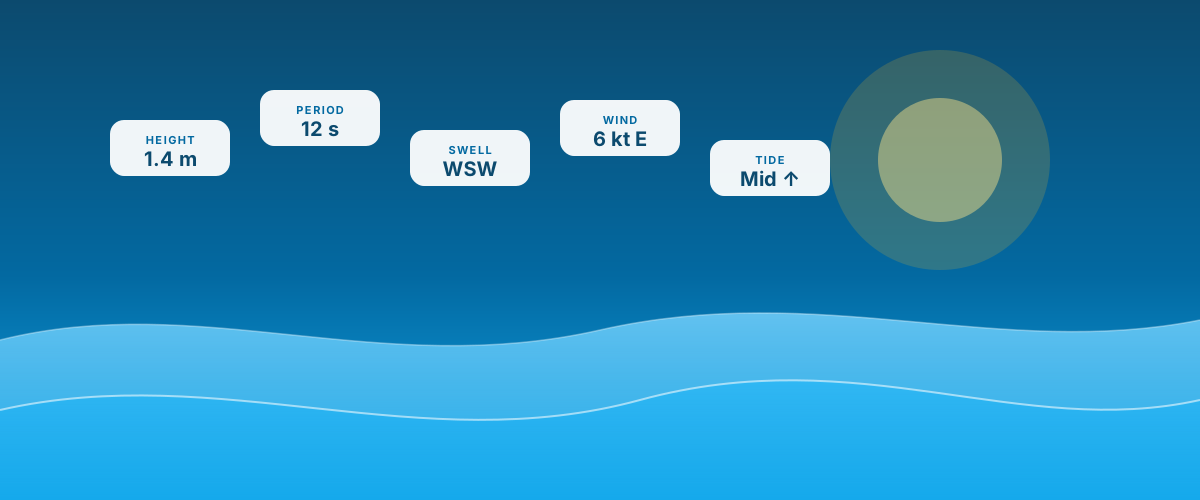
Most beginners fixate on wave height. Experienced surfers watch swell period first. Here's why a 1.2 m swell at 14 s is often far better than a 2 m swell at 7 s.
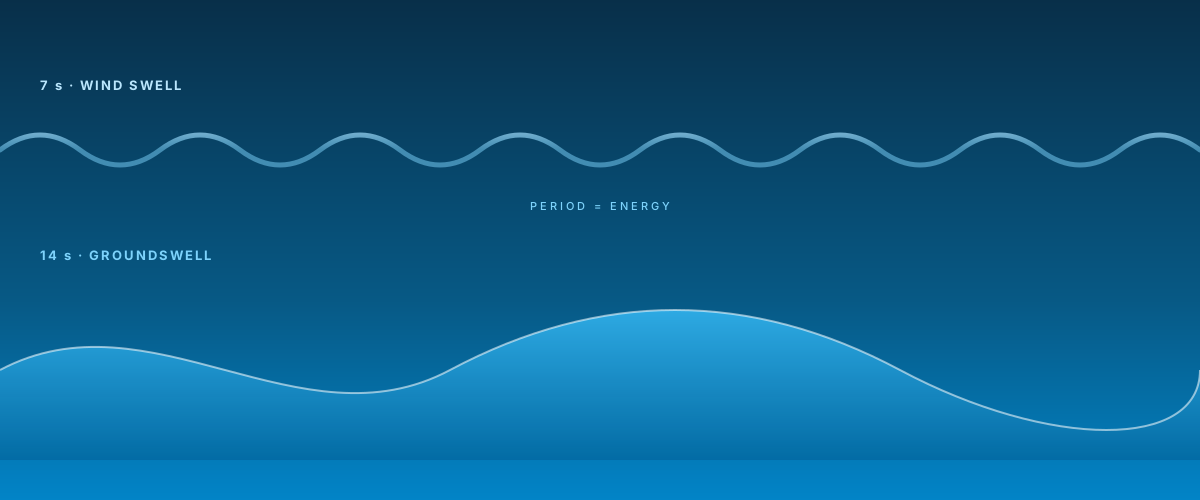
Period is energy
The longer the gap between waves, the deeper the swell travels through the water column. A 14-second swell feels the seafloor from much deeper and surges up onto the sand or reef with real power. A 7-second wind swell is shallow, disorganised, and tends to break all at once rather than peeling cleanly.
The rule of thumb
- Under 8 s — wind swell, choppy, closes out quickly
- 8–10 s — marginal, can work at quality point breaks
- 10–14 s — good groundswell, peels well on most breaks
- 14 s+ — excellent groundswell, works even at moderate heights
Filter by period before height. If the period is below 9 s, the height number is almost irrelevant.
Next time you check the forecast, filter by period first. If it's below 9 s, the wave height number is almost irrelevant.