You can have perfect swell and still get terrible surf if the wind is wrong. Wind direction is often the make-or-break variable that separates a great session from a wasted drive.
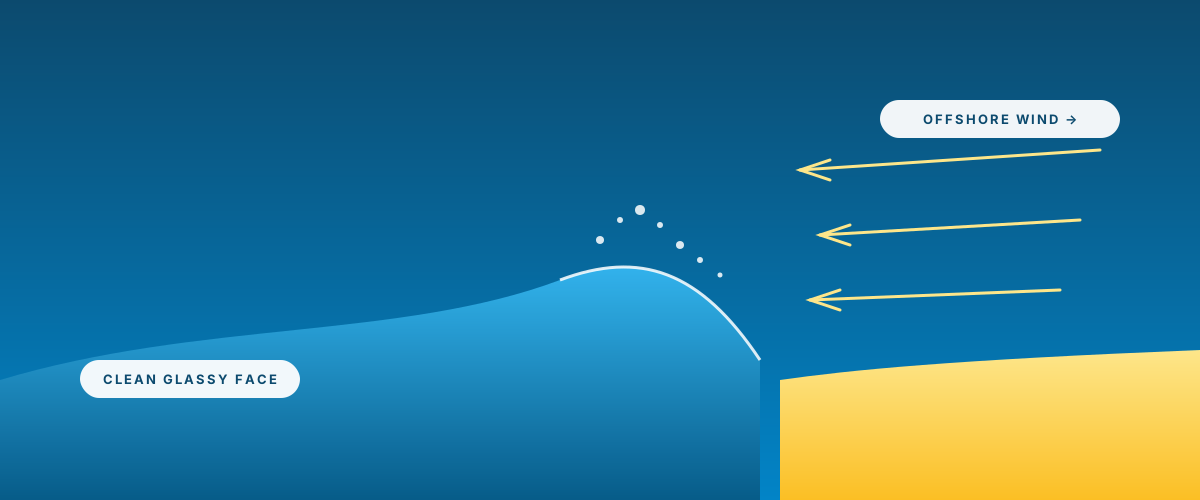
Offshore wind
Blows from the land toward the ocean — away from the beach. It holds the lip of the wave up, creates that classic glassy face, and lets the wave wall before it breaks. This is what you see in surf photography: crystal walls, spray blowing back from the crest.
Onshore wind
Blows from the ocean toward the land — into the breaking wave. It knocks down the face before you can ride it, creates surface chop, and generally turns waves into a messy closeout.
Side-shore wind
Runs parallel to the beach. It's acceptable — better than onshore, but without the grooming effect of offshore.
"Offshore" is relative to which way your beach faces — a NE wind is offshore at a SW-facing beach, but onshore at a NE-facing one.
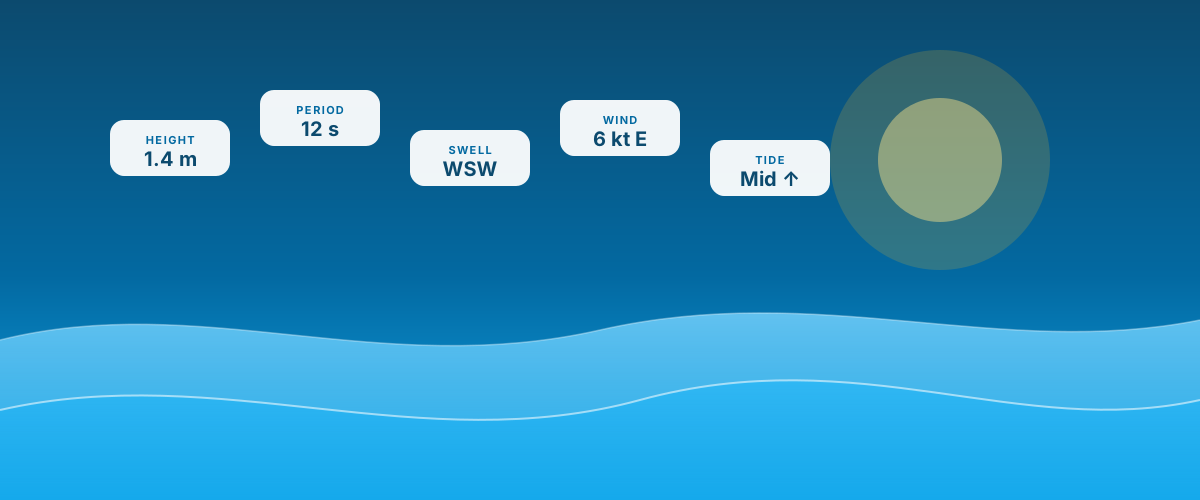
Surfing Well shows wind direction as a compass bearing so you can judge this yourself for any spot.